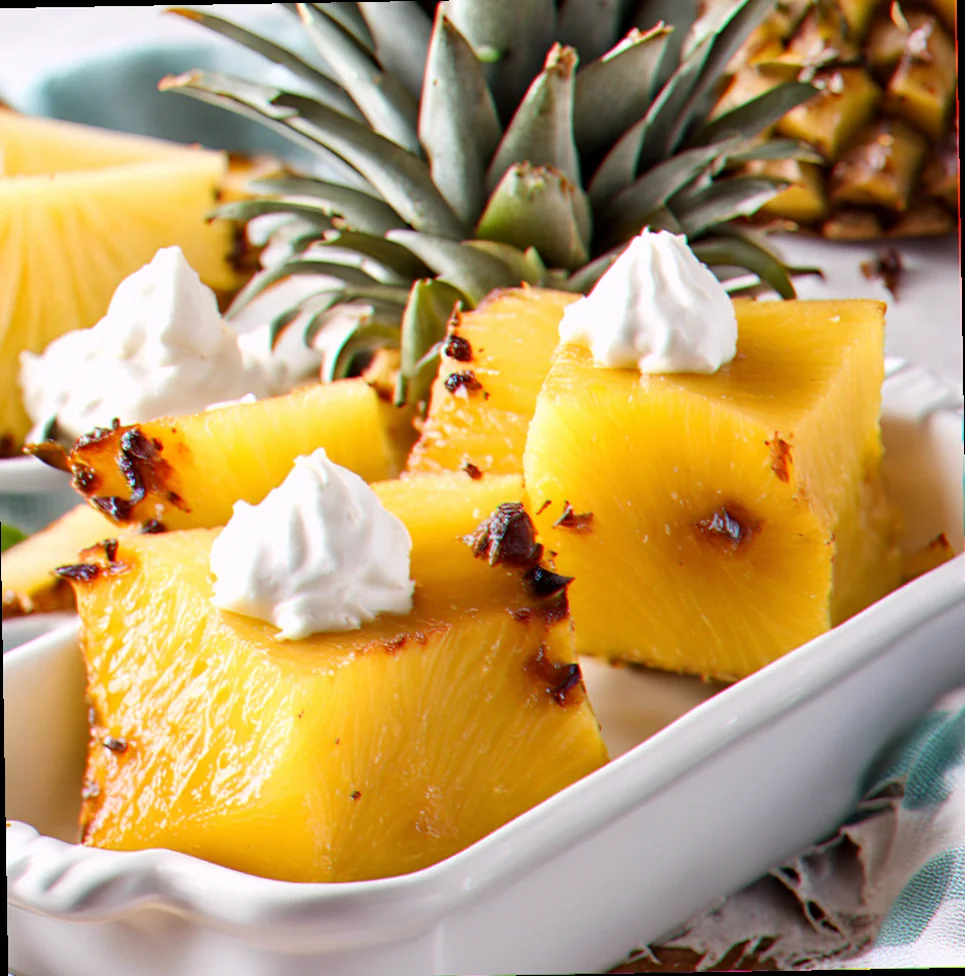
Baked pineapple achieves a sublime balance of intensified sweetness and a tender, yielding texture, with edges that develop a delightful chewiness. This version excels by leveraging a simple caramelisation technique enhanced by a hint of warming spice, transforming the fruit into a dessert or side that is both elegant and deeply satisfying.
Recipe Overview
| Detail | Value |
|---|---|
| Dish | Caramelised Baked Pineapple with Cinnamon |
| Cuisine / category | Dessert / Tropical Fruit Side |
| Prep time | 10 minutes |
| Cook time | 20 minutes |
| Total time | 30 minutes |
| Servings | 4 |
| Difficulty | Easy |
| Key technique | Baking / Caramelisation |
| Flavour profile | Sweet, Caramelised, Warmly Spiced, Tangy |
| Best served | After dinner, with grilled meats, on a summer evening |
Ingredients
This ingredient list is curated to amplify the natural sweetness of the pineapple while introducing a comforting spiced warmth and a touch of richness.
- 1 large ripe pineapple (approx. 1.5 kg), peeled, cored, and cut into 2 cm thick rings or wedges
- 60 grams unsalted butter, melted
- 50 grams light brown sugar
- 1 teaspoon ground cinnamon
- 1/4 teaspoon ground nutmeg
- 1 tablespoon fresh lime juice
- Optional: Fresh mint leaves, for garnish
Step-by-Step Method
The sequence of steps ensures even caramelisation and penetration of flavours, leading to a perfectly tender and flavourful baked pineapple.
- Step 1 - Preheat Oven and Prepare Baking Dish: Preheat your oven to 190°C (170°C fan/gas mark 5). Lightly grease a shallow baking dish (approximately 23x33 cm) with a small amount of butter or cooking spray to prevent sticking.
- Step 2 - Prepare Pineapple: Ensure your pineapple is thoroughly peeled, the tough core removed, and then cut into uniform 2 cm thick rings or wedges. Uniformity is key for even cooking and caramelisation.
- Step 3 - Mix Glaze: In a small bowl, whisk together the melted butter, light brown sugar, ground cinnamon, and ground nutmeg until well combined. This mixture will form the flavourful glaze.
- Step 4 - Glaze Pineapple: Arrange the pineapple pieces in a single layer in the prepared baking dish. Drizzle the cinnamon-sugar mixture evenly over the pineapple slices. Use a pastry brush to ensure each piece is well coated.
- Step 5 - Bake: Place the baking dish in the preheated oven. Bake for 18-20 minutes, or until the pineapple is tender when pierced with a fork and the edges are beginning to caramelise and slightly crisp. The sugars should bubble and darken, creating a sticky glaze.
- Step 6 - Deglaze and Finish: Carefully remove the baking dish from the oven. Drizzle the fresh lime juice over the hot baked pineapple. The acidity of the lime juice will cut through the richness and enhance the fruit's natural tang.
- Step 7 - Rest and Serve: Let the baked pineapple rest in the baking dish for 5 minutes before serving. This allows the juices to settle and the flavours to meld. Garnish with fresh mint leaves if desired.
The Science Behind Caramelised Baked Pineapple
The magic of baked pineapple lies in the process of caramelisation. When the natural sugars present in the pineapple (primarily fructose and glucose) are exposed to heat, they undergo a complex series of chemical reactions known as caramelisation. This process, which occurs without the involvement of amino acids (unlike the Maillard reaction), breaks down the sugar molecules, creating hundreds of new flavour compounds that contribute to the rich, nutty, and slightly bitter notes characteristic of caramel. The high heat of the oven also evaporates some of the water content within the fruit, concentrating the sugars further and leading to a sticky, syrupy texture. The addition of cinnamon and nutmeg introduces volatile aromatic compounds that complement the sweet and tangy notes of the fruit, enhancing its overall flavour profile. The lime juice added at the end provides a crucial element of acidity, balancing the sweetness and preventing the dish from becoming cloying, thus creating a more complex and appealing flavour profile.
Ingredient Substitutions and Variations
- Brown Sugar → White Granulated Sugar: White sugar will caramelise well but will result in a slightly less complex, more straightforward sweetness. The texture will be similar. This is a good substitute if brown sugar is unavailable.
- Butter → Coconut Oil: For a dairy-free or vegan variation, melted coconut oil (approx. 60 ml) can be used instead of butter. It will impart a subtle coconut flavour that pairs well with pineapple. The caramelisation and texture will be comparable.
- Dietary Variation - Vegan: Ensure you use coconut oil instead of butter. The rest of the recipe is naturally vegan.
- Flavour Variation - Spicier: Add 1/4 teaspoon of ground ginger along with the cinnamon and nutmeg for an extra layer of warmth and spice. For a hint of heat, a tiny pinch of cayenne pepper can also be added, though use sparingly.
- Flavour Variation - Tropical Twist: A tablespoon of shredded unsweetened coconut can be stirred into the glaze mixture before baking, or sprinkled over the pineapple in the last 5 minutes of baking for added texture and tropical flavour.
Make-Ahead, Storage, and Reheating
While best enjoyed fresh, caramelised baked pineapple can be prepared partially in advance. The pineapple can be peeled, cored, and cut up to 24 hours ahead of time and stored in an airtight container in the refrigerator. The glaze mixture can also be prepared and stored separately. However, for optimal texture and caramelisation, it is recommended to bake the pineapple just before serving. If you do bake it ahead, allow it to cool completely and store in an airtight container in the refrigerator for up to 2 days. To reheat, gently warm the baked pineapple in a preheated oven at 150°C (130°C fan/gas mark 2) for 8-10 minutes, or until just heated through. Avoid microwaving, as this can lead to a mushy texture and uneven heating.
What to Serve With Caramelised Baked Pineapple
Caramelised baked pineapple serves as an excellent sweet and tangy counterpoint to rich, savoury dishes. It pairs beautifully with grilled pork tenderloin or slow-cooked pulled pork, where its bright acidity cuts through the fattiness of the meat. For a lighter option, it makes a delightful accompaniment to pan-seared chicken breasts or grilled salmon, adding a tropical flair. On a summer evening, this baked pineapple can be a star dessert on its own, perhaps served with a dollop of coconut whipped cream or a scoop of vanilla bean ice cream. It also works wonderfully as part of a BBQ spread, complementing the smoky flavours of grilled ribs.
Common Mistakes and How to Avoid Them
- Mistake 1: Underripe or Overripe Pineapple: Using an underripe pineapple will result in a tart and firm texture. An overripe pineapple can become too mushy when baked. Fix: Select a pineapple that has a sweet aroma at the base, yields slightly to pressure, and has vibrant green leaves.
- Mistake 2: Uneven Cutting: Inconsistent pineapple piece sizes lead to some pieces being overcooked and burnt while others are undercooked. Fix: Ensure all pineapple rings or wedges are cut to a uniform thickness of approximately 2 cm.
- Mistake 3: Burning the Glaze: Baking at too high a temperature for too long can cause the sugar glaze to burn, resulting in a bitter flavour. Fix: Monitor the pineapple closely during the last 5-10 minutes of baking. If the edges are browning too quickly, loosely tent the dish with aluminium foil.
Frequently Asked Questions
Can I make Caramelised Baked Pineapple with Cinnamon ahead of time?
Yes, you can prepare the pineapple by peeling, coring, and cutting it up to 24 hours in advance and storing it in an airtight container in the refrigerator. The glaze can also be mixed separately. However, for the best caramelised texture and flavour, it is recommended to bake the pineapple just before serving. If baked ahead, cool completely and store in an airtight container in the refrigerator for up to 2 days. Reheat gently in a 150°C oven for 8-10 minutes.
How do I know when Caramelised Baked Pineapple with Cinnamon is cooked properly?
You'll know the baked pineapple is cooked properly when it is tender when pierced with a fork, and the edges have started to caramelise and turn a golden brown colour. The sugars in the glaze should be bubbling and slightly sticky. The aroma will also become more intense and sweet.
What is the best substitute for brown sugar in Caramelised Baked Pineapple with Cinnamon?
The best substitute for light brown sugar is white granulated sugar. It will still caramelise effectively and provide sweetness, though the flavour profile will be slightly less complex. You can also use dark brown sugar for a richer, molasses-infused caramel flavour. For a dairy-free option, coconut oil can be used in place of butter in the glaze.