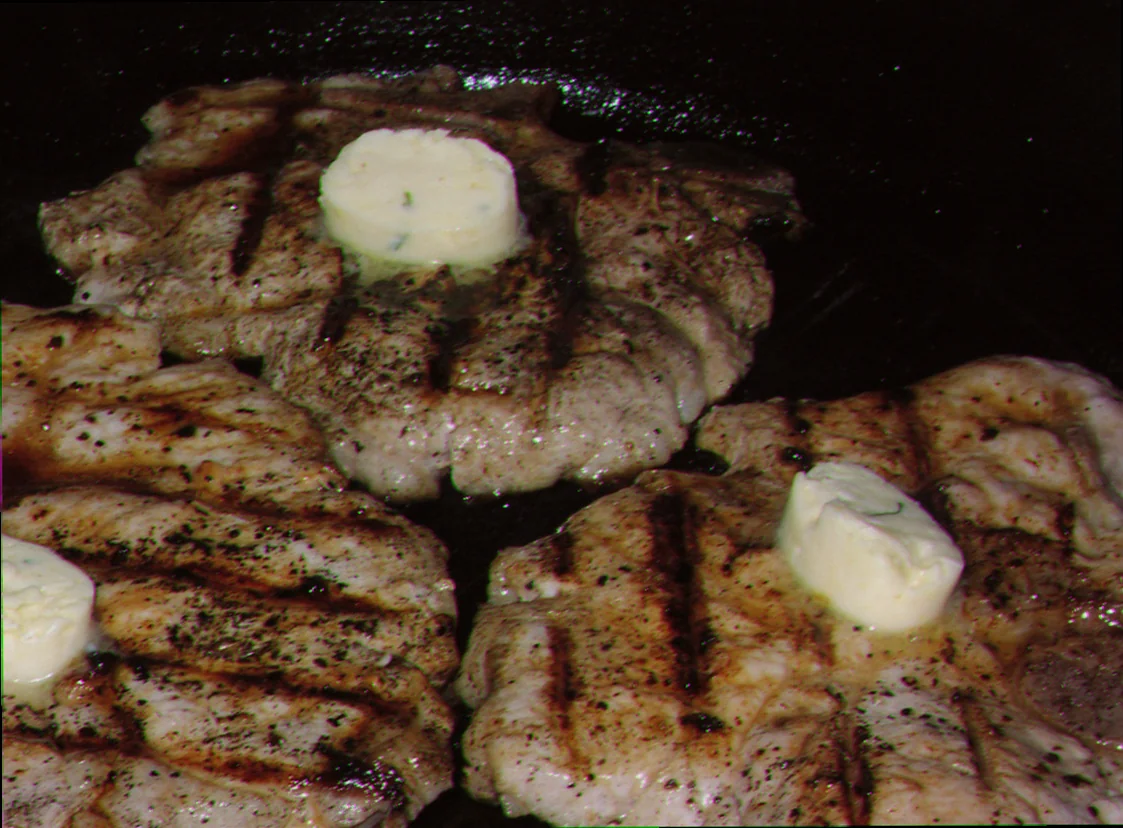
The succulence of a perfectly cooked thin-cut pork chop hinges on the rapid transformation of muscle proteins under heat. As temperature rises, myosin and actin filaments begin to denature and coagulate, a process that, when precisely controlled, results in a tender, yielding texture. Crucially, the thin cut's limited moisture reservoir necessitates a swift searing to lock in flavour through the Maillard reaction before overcooking can lead to toughness. This inherent challenge is the hallmark of the Thin Cut Pork Chops recipe, a beloved staple across many cuisines.
Complete Recipe Overview
| Property | Detail |
|---|---|
| Dish entity | Thin Cut Pork Chops |
| Cuisine origin | American / European Home Cooking |
| Defining technique | Pan-Searing |
| Hero ingredients | Pork Loin Chops, Fat (Oil/Butter), Seasoning (Salt/Pepper) |
| Critical ratio | Meat Thickness to Cooking Time (implicitly) |
| Prep time | 5 minutes |
| Cook time | 6-10 minutes at 200°C |
| Rest / chill time | 5 minutes |
| Yield | 2-4 servings |
| Difficulty | Easy - requires attention to timing due to the thin cut. |
Ingredients: Quantities, Roles, and Critical Ratios
The simplicity of this dish places immense importance on the quality of its few components. The hero ingredients - the pork itself, the cooking fat, and the basic seasoning - must work in harmony to elevate the inherent flavour of the pork. The critical, albeit implicit, ratio here is the thinness of the chop to the rapid cooking time; a thicker chop would demand a different approach entirely. This delicate balance ensures the exterior develops a desirable crust while the interior remains moist and tender.
- Pork Loin Chops (thin-cut, ~1.5-2 cm thick) - 4 x 150-200 g - Role: The star protein, providing flavour and texture. Thin cuts are key for quick cooking.
- Olive Oil or Grapeseed Oil - 30 ml - Role: Provides a high smoke point for effective searing and contributes to the Maillard reaction.
- Unsalted Butter - 30 g - Role: Adds richness, flavour, and aids in browning when added towards the end.
- Kosher Salt - 5 g (or to taste) - Role: Enhances flavour, draws out moisture for better crust formation, and tenderizes slightly.
- Freshly Ground Black Pepper - 2 g (or to taste) - Role: Adds a pungent counterpoint to the richness of the pork.
- Optional: Garlic Cloves, halved - 2 - Role: Infuses the cooking fat with aromatic flavour during the final stages.
- Optional: Fresh Thyme or Rosemary Sprigs - 2 - Role: Adds herbal notes to the fat and pork as it sears.
The Science of Pan-Searing Pork
Pan-searing thin-cut pork chops is a masterclass in managing heat and moisture. The primary goal is to induce the Maillard reaction on the surface of the pork. This complex series of chemical reactions between amino acids and reducing sugars, initiated by heat (above 140°C), creates hundreds of new flavour compounds and the characteristic brown colour. For thin cuts, the challenge is that the heat needed for Maillard reaction also rapidly penetrates the meat. Without careful control, the interior will quickly cook past the optimal temperature, leading to dry, chalky protein. The fat (oil and butter) is crucial here; it transfers heat efficiently from the pan to the meat, creating a uniform cooking surface and enabling the rapid browning. Butter, added later, provides flavour and helps create a beautiful, glossy finish due to its milk solids caramelizing.
Method: Pan-Searing at Every Critical Stage
The sequence of actions is optimized for achieving a golden crust and a juicy interior in minimal time.
- Pat Dry - Pork Preparation: Using paper towels, thoroughly pat the pork chops dry on all sides. This is critical for achieving a good sear by removing surface moisture that would otherwise steam the meat.
- Season - Immediate Application: Generously season both sides of the pork chops with kosher salt and freshly ground black pepper. Let them sit at room temperature for at least 5 minutes before cooking.
- Preheat Pan - Building the Foundation: Place a heavy-bottomed skillet (cast iron or stainless steel recommended) over medium-high heat. Add the olive oil. Allow the oil to shimmer and begin to lightly smoke; this indicates the pan is hot enough for searing.
- Sear - Critical Control Point 1 (Initial Contact): Carefully place the seasoned pork chops into the hot skillet, ensuring they have space and are not overcrowded. Do not move them for at least 2-3 minutes. This initial contact is where the crust begins to form.
- Flip - Developing the Crust: Flip the pork chops. They should have a golden-brown, satisfying crust. If they are not browning, the pan may not be hot enough, or the chops were not dry enough.
- Baste - Adding Fat and Flavour: Reduce the heat slightly to medium. Add the butter, garlic halves, and herb sprigs (if using) to the pan. As the butter melts and foams, tilt the pan and use a spoon to continuously baste the pork chops with the melted butter and aromatics for 2-4 minutes.
- Check - Critical Control Point 2 (Doneness): The thin cut cooks very quickly. The total cooking time should be around 6-10 minutes, depending on thickness and heat. The internal temperature should reach 63°C for a perfect medium-rare to medium doneness. For thicker chops, a thermometer is essential; for thin ones, visual cues (firmness, slight spring-back) can guide you. Be vigilant: overcooking is the primary pitfall.
- Rest - Essential for Juiciness: Remove the pork chops from the pan and place them on a clean plate or cutting board. Tent loosely with foil. Let them rest for at least 5 minutes. This allows the muscle fibres to relax and reabsorb the juices, preventing them from running out when cut.
- Serve - Presentation: Serve immediately, drizzled with any pan juices if desired.
Cultural and Historical Context of Pan-Seared Pork
The practice of pan-searing meat, including pork chops, has deep roots in European culinary traditions, particularly in regions where pork was a staple protein. In countries like France and Germany, simple preparations highlighting the quality of the meat were common. The thin-cut pork chop, as a specific format, likely evolved as a practical way to quickly cook a tender cut of pork loin, making it accessible for weeknight meals. It became a cornerstone of American home cooking, embraced for its speed and versatility, often served as a comforting, no-fuss meal.
Variations Across American Home Cooking and Modern Adaptations
- Breaded Cutlets (Schnitzel-style): In German and Austrian-inspired American cooking, thin pork cutlets are frequently coated in flour, egg, and breadcrumbs before pan-frying. This technique creates a crispier exterior and a slightly different textural contrast.
- Marinated and Grilled: While pan-searing is the focus here, a common adaptation involves marinating thin pork chops (often with soy sauce, garlic, and ginger) and then grilling them for a smoky, charred flavour profile.
- Gluten-Free Adaptation: For a gluten-free version, simply omit the optional flour dredging if making breaded cutlets, or ensure any coatings used are certified gluten-free. The pan-seared version requires no gluten-containing ingredients.
- Modern Fusion: Contemporary chefs might pan-sear thin pork chops and finish them with a pan sauce incorporating ingredients like Dijon mustard, white wine, or a touch of cream, elevating the simple dish with more complex flavours.
Storage, Freezing, and Reheating Thin Cut Pork Chops
Cooked thin-cut pork chops are best enjoyed immediately. However, they can be stored and reheated with some consideration for texture.
- Refrigerator Storage: Store cooled cooked pork chops in an airtight container in the refrigerator for up to 3 days.
- Freezer Storage: For longer storage, wrap individual cooled chops tightly in plastic wrap, then in foil, or place in a freezer-safe bag. Freeze for up to 2-3 months. Note that freezing can slightly alter the texture, making them a bit drier upon reheating.
- Reheating:
- Stovetop: Reheat gently in a skillet over medium-low heat with a splash of water or broth, covered, for 3-5 minutes, or until heated through (internal temperature 63°C).
- Oven: Reheat in a preheated oven at 150°C for 5-8 minutes, or until heated through.
Pairing Thin Cut Pork Chops: Sides, Sauces, and Drinks
The clean, lean flavour of pan-seared pork chops makes them incredibly versatile.
- Sides: Classic pairings include creamy mashed potatoes or a bright, acidic coleslaw. Roasted Brussels sprouts or steamed green beans offer a good textural and flavour contrast.
- Sauces: A simple pan sauce made from deglazing the skillet with white wine or chicken broth, reduced with a knob of butter, is elegant. A dollop of apple sauce provides a sweet counterpoint.
- Drinks: A crisp, dry white wine like a Sauvignon Blanc or a Pinot Grigio works well, their acidity cutting through the richness. For red wine drinkers, a light-bodied Pinot Noir is a good choice. A pale ale or a crisp lager also complements the pork beautifully.
Answers to the Most-Searched Questions About Thin Cut Pork Chops
What temperature should thin cut pork chops be cooked at - and how do I know it's done?
Thin cut pork chops are typically cooked over medium-high heat, aiming for an initial searing temperature of around 200°C in the pan. Doneness is best determined by internal temperature: 63°C for medium-rare to medium. Visually, they should be firm to the touch with a slight spring-back. The surface should be a deep golden brown.
What is the difference between Thin Cut Pork Chops and a thicker pork chop?
The primary difference lies in cooking time and technique. Thin-cut pork chops (1.5-2 cm thick) require a rapid pan-sear (6-10 minutes total) to avoid overcooking the interior. Thicker chops (2.5 cm+) can tolerate longer cooking times, often requiring a sear followed by oven finishing or a gentler pan-fry to cook through evenly without drying out.
Can Thin Cut Pork Chops be made in advance, and does it freeze well?
Yes, but with caveats. Cooked thin cut pork chops can be made a day or two in advance and stored in the refrigerator. They freeze reasonably well for up to 2-3 months, especially if wrapped tightly. However, both reheating and freezing can lead to a slightly drier texture compared to when freshly cooked. Reheat gently to minimize this effect.