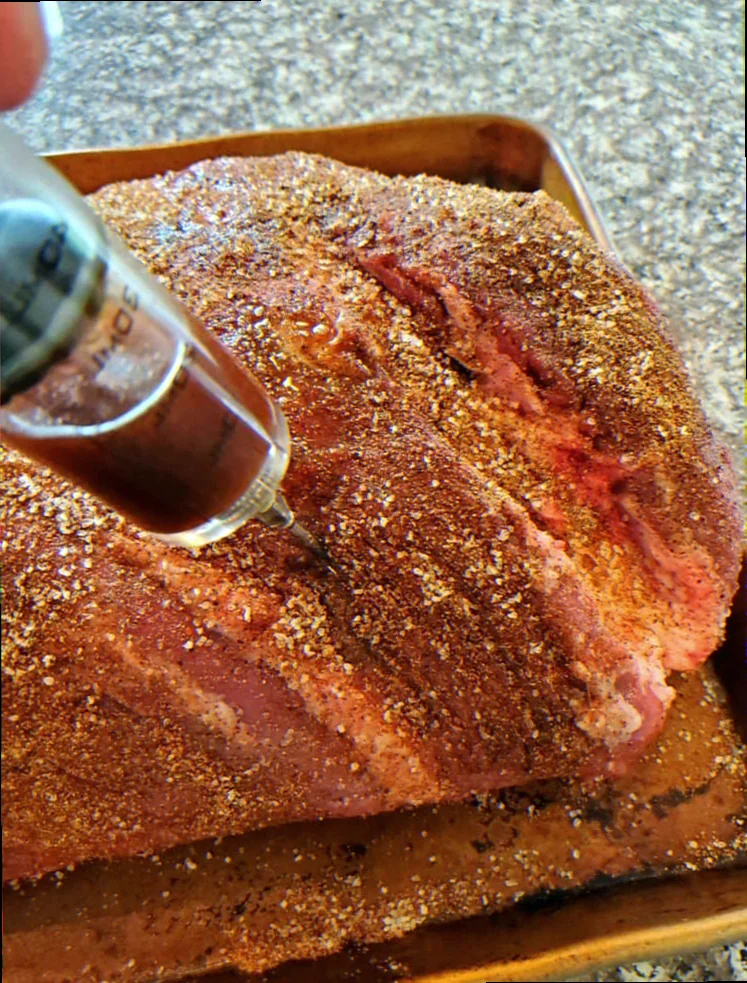
Achieving the perfect competition-style brisket requires more than just a high-quality rub; it necessitates an internal hydration strategy that delivers deep umami notes and structural moisture. This brisket injection recipe works by introducing a balanced solution of sodium, glutamates, and lipids directly into the muscle fibers, ensuring the flat remains succulent while the point develops its signature buttery texture during the grueling twelve-hour smoke.
Recipe Overview
| Detail | Value |
|---|---|
| Dish | Brisket Injection Liquid |
| Cuisine / category | Texas-Style BBQ / Meat Preparation |
| Prep time | 10 minutes |
| Cook time | 5 minutes |
| Total time | 15 minutes |
| Servings | 1 large packer brisket (approx. 6-8kg) |
| Difficulty | Easy |
| Key technique | Internal marination via meat injection |
| Flavour profile | Umami-rich, savory, and subtly acidic |
| Best served | Competition BBQ or backyard gatherings |
Ingredients
This ingredient profile is formulated to maximize the water-holding capacity of the beef proteins while enhancing the natural beefy flavor of the brisket. We use a combination of low-sodium beef broth to control the salinity and Worcestershire sauce for a complex fermented finish.
- 500ml (approx. 2 cups) Low-sodium beef broth - chilled or room temperature
- 60ml (4 tbsp) Worcestershire sauce - for fermented depth and acidity
- 30g (2 tbsp) Unsalted butter - melted but not hot
- 15g (1 tbsp) Beef base or bouillon paste - such as Better Than Bouillon
- 10g (2 tsp) Garlic powder - finely granulated for easy flow through the needle
- 10g (2 tsp) Onion powder - finely granulated
- 5g (1 tsp) Fine sea salt - adjusted based on the saltiness of your rub
- 3g (1/2 tsp) MSG (optional) - for heightened savory perception
- 2g (1/2 tsp) Black pepper - finely ground to prevent syringe clogging
Step-by-Step Method
The logic behind this method is to create a homogenous emulsion that flows easily through a syringe without clogging the needle, while ensuring the flavors are fully dissolved for even distribution.
- Step 1 - Combine and Dissolve: In a small saucepan over medium-low heat, whisk together the 500ml beef broth, 15g beef base, 10g garlic powder, 10g onion powder, 5g salt, and 3g MSG. Heat the mixture to approximately 50°C (122°F), just until the solids are fully dissolved. You will smell the garlic and onion blooming as the liquid warms.
- Step 2 - Emulsify Lipids: Slowly whisk in the 60ml Worcestershire sauce and 30g melted butter. The liquid should look uniform and dark with a slight sheen on the surface. Ensure the butter is fully integrated so it doesn't separate later.
- Step 3 - Cool the Solution: Remove from heat and allow the liquid to cool to at least 20°C (room temperature) before using. Injecting a hot liquid into cold raw meat can negatively affect the texture and raise food safety concerns. The liquid should feel cool to the touch and remain fluid.
- Step 4 - Prepare the Meat: Place your trimmed brisket in a deep foil pan to catch any overflow. Using a professional meat injector, draw the liquid into the chamber. Ensure there is no air trapped in the syringe to prevent "squirting."
- Step 5 - Inject the Brisket: Insert the needle into the meat, following a grid pattern spaced about 2-3cm apart. Insert the needle deep into the thickest part of the flat and point, then depress the plunger slowly as you withdraw the needle. You should see the meat visibly plump and expand; if the liquid fountains out, you are injecting too quickly or the needle is too close to the surface.
- Step 6 - Final Rest and Rub: Wipe away any excess surface moisture with a paper towel. This is crucial for ensuring your dry rub adheres properly. Once injected, apply your salt and pepper rub and let the meat rest for 30-60 minutes before placing it in the smoker.
The Science Behind Brisket Injection
Brisket is a high-connective-tissue cut from the pectoral region of the cow, containing significant amounts of collagen. During the smoking process, which typically occurs between 107°C and 135°C, the meat reaches a phase known as "the stall." This is where evaporative cooling on the surface of the meat matches the heat energy being applied, causing the internal temperature to plateau. During this hours-long process, the meat loses a substantial percentage of its internal moisture.
By using an injection, we utilize the principle of osmosis and the water-holding capacity of proteins. The sodium in the injection helps to denature the protein strands slightly, allowing them to trap and hold onto more water. Furthermore, the addition of beef broth and Worcestershire sauce provides "precursors" for the Maillard reaction. Even though this reaction usually happens on the surface, the presence of these amino acids and sugars inside the meat helps develop a richer, deeper flavor profile that complements the smoky bark. The butter adds a layer of intramuscular fat that mimics the "melt-in-the-mouth" sensation of a highly marbled Wagyu brisket, even when using a Choice or Select grade cut.
Ingredient Substitutions and Variations
Adjusting the injection allows you to tailor the final flavor profile to your specific BBQ style, whether you prefer a sweet Kansas City finish or a savory Central Texas profile.
- Low-sodium beef broth → Dark Ale or Stout: Using a malty beer adds a deep, roasted chocolate and coffee note to the meat. This works well for heavy smoke profiles but may slightly darken the interior of the meat. Verdict: Works well for a bold flavor profile.
- Unsalted butter → Wagyu Beef Tallow: Substituting butter for rendered tallow provides a more authentic "beef-on-beef" flavor and a higher smoke point. The texture becomes significantly richer. Verdict: Highly recommended for competition-grade results.
- Worcestershire sauce → Soy Sauce: Soy sauce provides a more direct salt hit and a different type of umami. If using soy, reduce the added sea salt to 2g to avoid over-seasoning. Verdict: Use only if you prefer an Asian-fusion flavor profile.
- Dietary variation - Gluten-Free: Ensure the Worcestershire sauce is a certified gluten-free brand (like Lea & Perrins in the US) or substitute with coconut aminos. The method remains identical.
- Flavour variation - Spicy Kick: Add 5ml (1 tsp) of hot sauce or a pinch of cayenne pepper to the liquid during the heating phase to introduce a subtle back-of-the-throat heat.
Make-Ahead, Storage, and Reheating
Efficiency is key when managing a 12-hour smoke. You can easily prepare this injection liquid up to 3 days in advance. Store the cooled liquid in an airtight glass jar or a sealed plastic container in the refrigerator at or below 4°C. When you are ready to use it, you may need to gently warm the container in a bowl of warm water if the butter has solidified, then shake vigorously to re-emulsify the fats.
While the injection itself isn't reheated on its own, its presence in the brisket significantly improves the reheating quality of the cooked meat. If you have leftover brisket, slice it while cold, then reheat in a vacuum-sealed bag in a water bath at 74°C or in a covered pan with a splash of leftover injection liquid at 150°C. The internal moisture provided by the original injection prevents the fibers from becoming "stringy" or dry during the second heat cycle.
What to Serve With Smoked Brisket
The rich, savory nature of an injected brisket pairs best with sides that offer acidity or crunch to cleanse the palate. Consider these traditional BBQ entities:
- Pickled Red Onions and Jalapeños: The sharp acetic acid in the pickles cuts through the rendered fat and the buttery mouthfeel of the injection. This is a staple of Texas BBQ.
- Vinegar-Based Coleslaw: Unlike creamy slaws, a vinegar-based dressing provides a bright contrast to the heavy umami of the beef broth and Worcestershire sauce.
- Smoked Pit Beans: Use the leftover "trimmings" from your brisket and a few tablespoons of the injection liquid in your bean pot to create a cohesive flavor bridge between the main protein and the side dish.
Common Mistakes and How to Avoid Them
- Mistake 1: Injecting Cold Fat into Cold Meat: If your butter or tallow is too cold, it will solidify the moment it hits the cold meat, creating "fat pockets" rather than an even distribution. Fix: Ensure the injection is at room temperature and the fats are fully emulsified before starting.
- Mistake 2: Over-salting the Surface: Many people forget that the injection contains salt. If you inject a high-sodium liquid and then apply a heavy salt-based rub, the brisket will become inedible. Fix: Use a low-sodium broth for the injection and taste your rub beforehand; if the injection is salty, reduce the salt in your exterior rub by 25%.
- Mistake 3: Creating "Track Marks": Pumping too much liquid into one spot can cause the muscle fibers to separate, leaving unsightly gray holes in your slices. Fix: Use a multi-hole needle and move the needle continuously as you depress the plunger to ensure the liquid disperses evenly through the grain.
Frequently Asked Questions
Can I make this brisket injection recipe ahead of time?
Yes, you can make it up to 72 hours in advance. Keep it refrigerated in a sealed container. If the fats separate or solidify, gently warm the liquid and shake it well to restore the emulsion before filling your syringe.
How do I know when the brisket is injected properly?
The meat should feel firm and look noticeably "plumped" or swollen. You will also see small amounts of the liquid weeping back out of the entry points. The internal temperature of the raw meat will not change, but the weight of the brisket will increase by approximately 10-15%.
What is the best substitute for beef broth in this recipe?
The best substitute is a high-quality beef bone broth or a mixture of water and a premium beef base. Avoid using plain water, as it lacks the Maillard-reaction precursors (proteins and sugars) necessary to enhance the flavor of the beef. If you must use water, increase the amount of Worcestershire sauce and beef base to compensate for the lost depth.