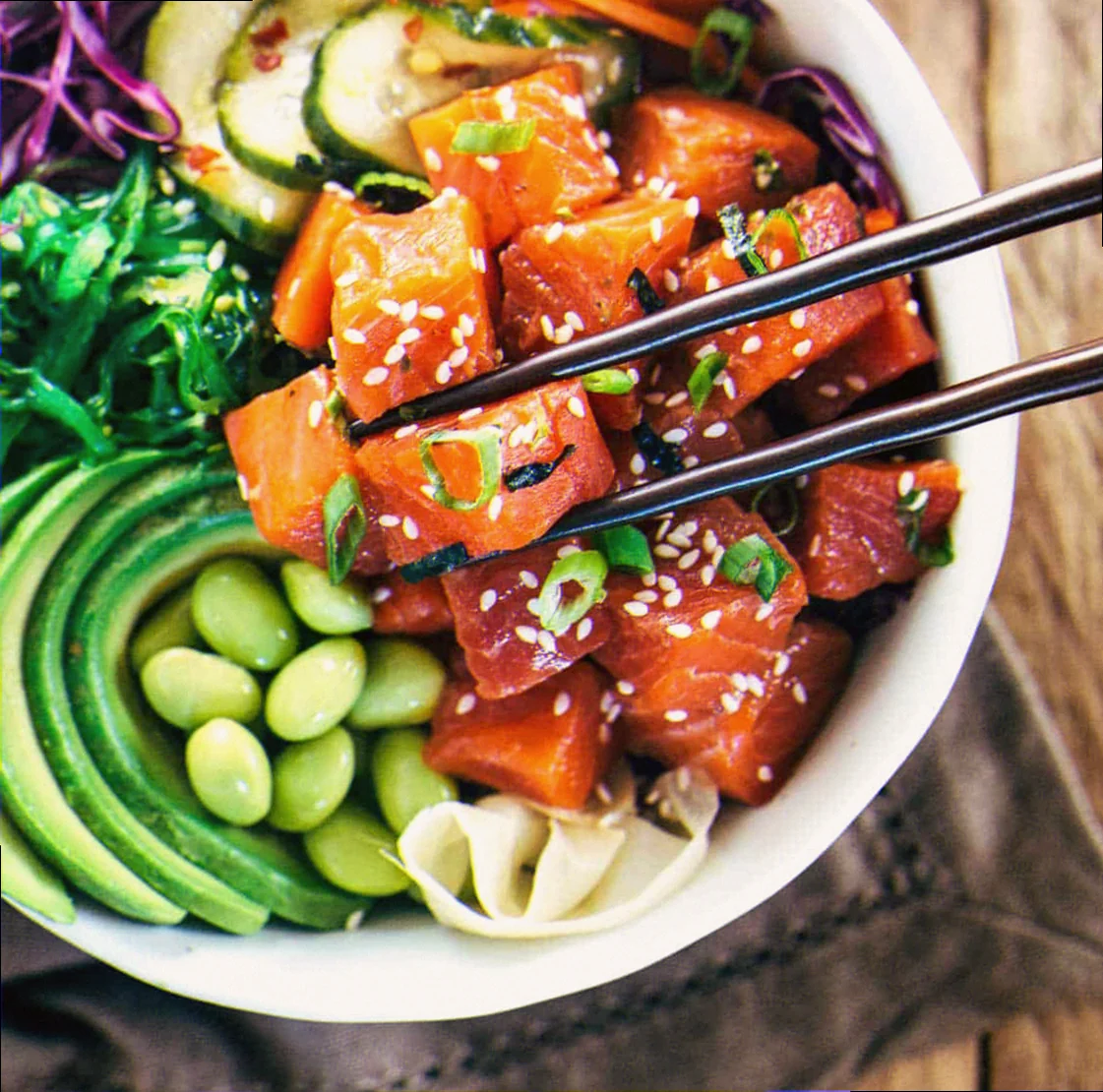
A perfectly balanced Salmon poke bowl delivers a symphony of textures - the yielding tenderness of raw or lightly seared salmon, the satisfying chew of sushi rice, and the crisp bite of fresh vegetables. This vibrant dish shines when the umami-rich marinade for the salmon harmonises with the creamy avocado and the subtle sweetness of the dressing.
Recipe Overview
| Detail | Value |
|---|---|
| Dish | Salmon Poke Bowl |
| Cuisine / category | Hawaiian-inspired / Rice Bowl |
| Prep time | 25 minutes |
| Cook time | 10 minutes (for rice) |
| Total time | 35 minutes |
| Servings | 2 |
| Difficulty | Easy |
| Key technique | Marinating and Assembly |
| Flavour profile | Umami, Tangy, Fresh, Savoury |
| Best served | Light Lunch, Weeknight Dinner |
Ingredients
This ingredient list is curated to build layers of flavour and texture, ensuring each component complements the star, salmon. We're focusing on quality fish and fresh accompaniments for an authentic taste experience.
- 300g sushi-grade salmon fillet, skin removed, cut into 1.5 cm cubes
- 1 tablespoon soy sauce (or tamari for gluten-free)
- 1 teaspoon toasted sesame oil
- 1/2 teaspoon grated fresh ginger
- 1/4 teaspoon red pepper flakes (optional, for a hint of heat)
- 1 cup sushi rice
- 1.25 cups water
- 2 tablespoons rice vinegar
- 1 tablespoon granulated sugar
- 1/2 teaspoon salt
- 1/2 ripe avocado, sliced
- 1/4 cup edamame, shelled
- 1/4 cup cucumber, thinly sliced
- 2 tablespoons shredded carrots
- 1 tablespoon thinly sliced red onion
- 1 teaspoon toasted sesame seeds (for garnish)
- 1 small sprig of fresh cilantro or thinly sliced scallions (for garnish)
Step-by-Step Method
The method is designed for efficiency, starting with the rice which requires passive cooking time, followed by marinating the salmon while the rice cools, and finally assembling the fresh components.
- Step 1 - Cook Rice: Rinse 1 cup of sushi rice under cold water until the water runs clear. Combine the rinsed rice and 1.25 cups of water in a medium saucepan. Bring to a boil over high heat, then reduce heat to low, cover tightly, and simmer for 10 minutes. Remove from heat and let stand, covered, for 5 minutes. While the rice is still warm, gently fold in the mixture of 2 tablespoons rice vinegar, 1 tablespoon sugar, and 1/2 teaspoon salt using a wooden spoon until evenly distributed. Let the rice cool slightly.
- Step 2 - Marinate Salmon: In a medium bowl, combine the cubed salmon with 1 tablespoon soy sauce, 1 teaspoon toasted sesame oil, 1/2 teaspoon grated fresh ginger, and 1/4 teaspoon red pepper flakes (if using). Gently toss to coat the salmon evenly. Let it marinate for at least 10 minutes while the rice cools.
- Step 3 - Prepare Vegetables: While the salmon marinates and rice cools, prepare your vegetables: slice 1/2 ripe avocado, shell 1/4 cup edamame, thinly slice 1/4 cup cucumber, shred 2 tablespoons carrots, and thinly slice 1 tablespoon red onion.
- Step 4 - Assemble Bowls: Divide the seasoned sushi rice evenly between two serving bowls. Arrange the marinated salmon cubes over one side of the rice.
- Step 5 - Garnish and Serve: Artfully arrange the sliced avocado, edamame, cucumber, shredded carrots, and red onion around the salmon. Garnish with 1 teaspoon of toasted sesame seeds and a sprig of fresh cilantro or sliced scallions. Serve immediately.
The Science Behind Salmon Poke
The magic of a great Salmon Poke Bowl lies in a few key culinary principles. Firstly, the marinating of the salmon is a form of denaturation. The acid from the soy sauce and ginger, along with the salt, begins to break down the protein structures within the fish, creating a more tender, yielding texture even without heat. This process also allows the savoury, umami flavours of the marinade to penetrate the fish. Secondly, the careful seasoning of the sushi rice is crucial. The addition of rice vinegar, sugar, and salt not only imparts a distinct tangy and slightly sweet flavour but also helps to create the characteristic slightly sticky texture of sushi rice, which is essential for holding the bowl's components together. Finally, the raw or lightly marinated nature of the salmon preserves its delicate, buttery texture and fresh, oceanic flavour, which is a stark and delightful contrast to the cooked rice and crisp vegetables.
Ingredient Substitutions and Variations
- Sushi-grade Salmon → Tuna: Swapping salmon for sushi-grade tuna is a popular variation. Tuna offers a firmer texture and a richer, more intensely savoury flavour profile. This substitution works very well and maintains the spirit of a traditional poke bowl.
- Soy Sauce → Coconut Aminos: For a soy-free or slightly sweeter alternative, coconut aminos can be used. They offer a similar umami depth but with a gentler, more caramelised sweetness. The flavour profile will shift slightly, becoming less sharply savoury.
- Dietary variation - Gluten-Free: Ensure you use tamari or coconut aminos instead of regular soy sauce. The rest of the recipe is naturally gluten-free.
- Flavour variation - Spicy Mayo Drizzle: For a richer, creamier, and spicier kick, mix 2 tablespoons of mayonnaise with 1 teaspoon of sriracha and a squeeze of lime juice. Drizzle this over the assembled bowl.
Make-Ahead, Storage, and Reheating
While poke bowls are best enjoyed fresh, components can be prepped in advance for a quicker assembly. The sushi rice can be cooked and seasoned up to 1 day ahead and stored in an airtight container in the refrigerator. The vegetables can also be washed, chopped, and stored separately in airtight containers in the fridge for up to 2 days. The salmon is best marinated just before serving to maintain its optimal texture. If you have leftovers, store the assembled bowl in an airtight container in the refrigerator for up to 24 hours. However, it is not recommended to reheat a poke bowl; it is designed to be eaten cold or at room temperature. The texture of the salmon and vegetables will degrade significantly if reheated.
What to Serve With Salmon Poke
A Salmon Poke Bowl is a complete meal on its own, but it pairs wonderfully with a few complementary dishes. For a light and refreshing accompaniment, a simple Seaweed Salad (Wakame Salad) with its own tangy vinaigrette offers a delightful oceanic flavour and a slightly chewy texture that complements the salmon. For a more substantial meal, consider serving it alongside Miso Soup, which provides a warm, savoury broth that contrasts nicely with the cool poke. These pairings are ideal for a casual yet satisfying Weeknight Dinner or a light lunch.
Common Mistakes and How to Avoid Them
- Mistake 1: Using non-sushi-grade salmon. This is a food safety risk and will result in a mushy or unpleasant texture. Always source salmon specifically labelled as "sushi-grade" or "sashimi-grade" from a reputable fishmonger.
- Mistake 2: Over-marinating the salmon. Marinating for too long (more than 30 minutes) can make the salmon "cooked" by the acid, resulting in a tough, dry texture rather than tender and yielding. Stick to the 10-20 minute marinating window.
- Mistake 3: Mushy rice. This often happens from not rinsing the rice thoroughly or using too much water. Ensure you rinse the rice until the water is clear and follow the precise water-to-rice ratio (1.25 cups water to 1 cup rice for most sushi rice).
Frequently Asked Questions
Can I make Salmon poke recipe ahead of time?
Yes, you can prepare components ahead of time. Cook and season the sushi rice up to 1 day in advance and store it in an airtight container in the refrigerator. Wash and chop vegetables up to 2 days in advance and store them separately. The salmon is best marinated just before assembling the bowls for optimal texture. Do not assemble the entire bowl more than a few hours in advance if you want to maintain the best texture of the raw fish and crisp vegetables.
How do I know when Salmon poke recipe is cooked properly?
Since this recipe primarily uses raw or lightly marinated salmon, "cooked properly" refers to the marination and texture of the fish. The salmon should feel firm to the touch but still yield slightly when pressed. The edges may appear slightly opaque from the marinade, but the centre should remain a vibrant pink and translucent. Avoid any fish that appears dry, flaky, or has a strong, unpleasant odour.
What is the best substitute for salmon in Salmon poke recipe?
The most common and highly recommended substitute for salmon in a poke bowl is sushi-grade tuna. It offers a similarly tender texture when raw and a rich, savoury flavour that holds up well to poke marinades. Other options include firm white fish like hamachi (yellowtail) or even cooked shrimp or tofu for a vegetarian alternative, though these will significantly alter the traditional poke flavour profile.