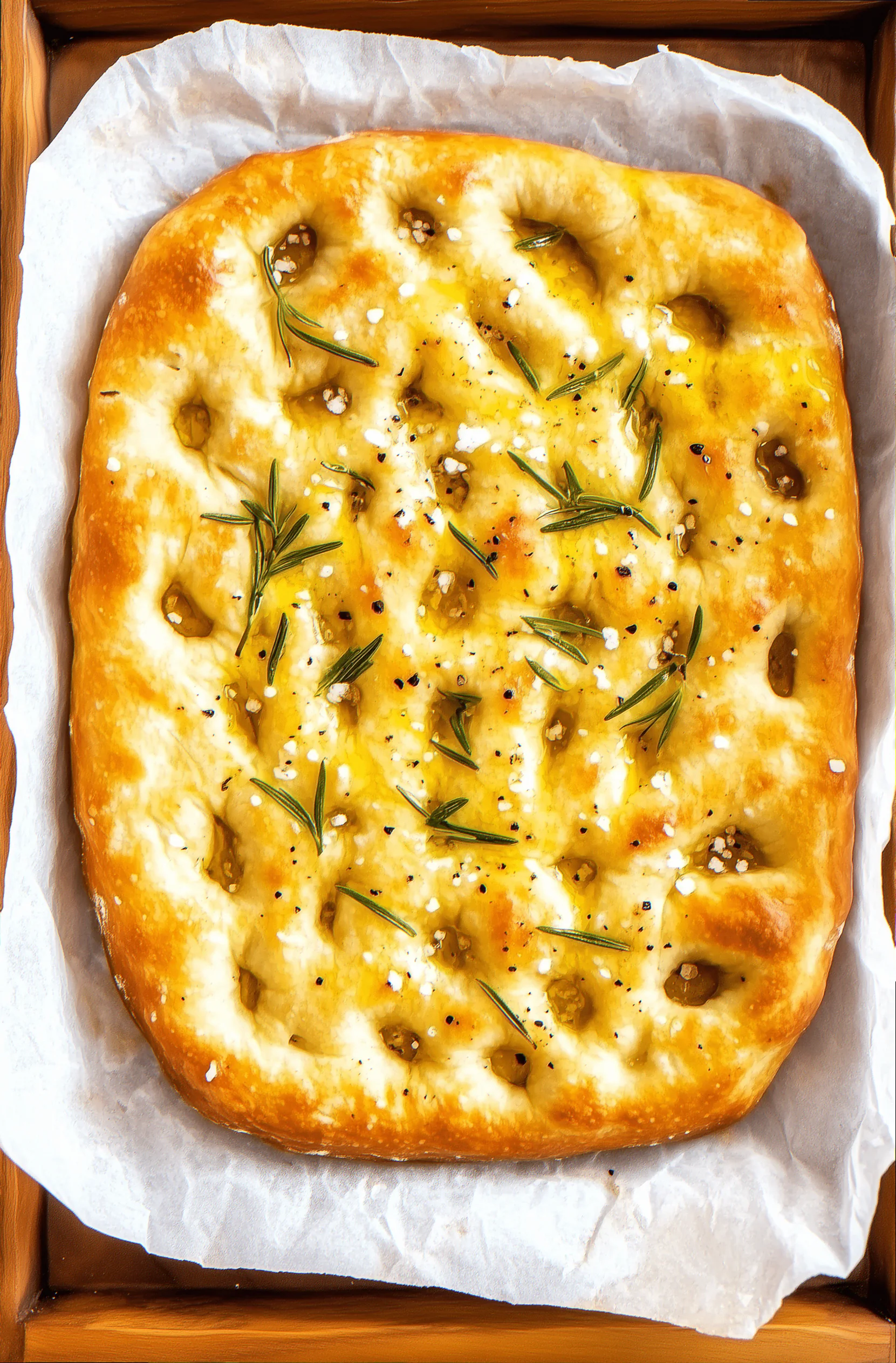
The aroma of warm olive oil, rosemary, and slowly fermented dough - that's the promise of a truly exceptional sourdough focaccia. Originating in Liguria, Italy, this flatbread is more than just bread; it's a celebration of simple ingredients and patient technique. Achieving the signature open crumb, delightfully chewy texture, and intensely flavourful crust hinges on three key elements: a vibrant sourdough starter, high-quality extra virgin olive oil, and a generous hand with sea salt. Master these, and you'll be rewarded with focaccia that transcends the ordinary.
Quick Reference
| Field | Detail |
|---|---|
| Dish | Sourdough Focaccia Bread |
| Origin | Italian (Liguria) |
| Hero ingredients | Sourdough Starter, Extra Virgin Olive Oil, Sea Salt |
| Defining technique | Bulk Fermentation |
| Texture | Chewy, Airy |
| Flavour | Tangy, Savory, Herbal |
| Total time | 24-36 hours (including fermentation) |
| Servings | 8-12 |
| Pairs with | Prosecco |
| Occasion | Brunch, Picnic, Casual Dinner |
Ingredients - What Actually Matters and Why
A robust sourdough starter is the heart of this focaccia, providing both leavening and a complex, tangy flavour. Extra virgin olive oil isn't just a topping; it's integral to the dough's structure and contributes significantly to the characteristic open crumb. Finally, sea salt isn't merely for seasoning; it controls fermentation and enhances the overall flavour profile.
- Sourdough Starter (active) - 100g - Provides the leavening power and signature tang.
- Extra Virgin Olive Oil - 100ml + extra for greasing - Creates a tender crumb and contributes to the flavour.
- Sea Salt - 10g - Controls fermentation and enhances flavour.
- Strong Bread Flour - 500g
- Water (room temperature) - 350ml
- Fresh Rosemary - 2 sprigs, leaves chopped
- Garlic - 2 cloves, minced
- Flaky Sea Salt - for sprinkling
Method: Bulk Ferment Step by Step
The success of this focaccia relies on a carefully managed bulk fermentation, allowing the dough to develop flavour and structure. This sequence of steps builds strength and creates the airy texture we're aiming for.
- Autolyse - Combine flour and water in a large bowl. Rest for 30 minutes - this allows the flour to fully hydrate, developing gluten without kneading.
- Incorporate - Add the sourdough starter and salt to the autolysed dough. Mix vigorously for 5-7 minutes until a shaggy dough forms.
- Knead - Perform stretch and folds every 30-60 minutes for the next 2-3 hours - this develops strength and elasticity. The dough should become smoother and more cohesive.
- Bulk Ferment - Cover the bowl and ferment at room temperature (22-24°C) for 12-18 hours, or until doubled in size. You'll see plenty of bubbles forming.
- Shape - Gently transfer the dough to a well-oiled 30x20cm baking pan. Dimple the surface generously with your fingertips, creating pockets for the olive oil.
- Proof - Drizzle generously with extra virgin olive oil, sprinkle with rosemary, garlic, and flaky sea salt. Proof, covered, for another 2-4 hours at room temperature. The dough should be puffy and the dimples should retain their shape.
- Bake - Preheat oven to 230°C. Bake for 20-25 minutes, or until golden brown and the crust is deeply coloured. The focaccia should sound hollow when tapped.
- Finish and plate - Brush with a final drizzle of olive oil immediately after removing from the oven. Slice into squares and serve warm, showcasing the golden-brown crust and abundant dimples.
Authentic vs Adapted: What Changes and What Doesn't
Traditional Ligurian focaccia is typically quite thin, often baked in large rectangular pans, and seasoned simply with olive oil and salt. It's a street food, meant to be eaten fresh and often enjoyed plain or with a drizzle of more olive oil. This recipe adapts the traditional method by incorporating a sourdough starter, which adds complexity and a longer fermentation time. Using a higher hydration dough (more water) is also a common adaptation for home bakers, resulting in a more open crumb. However, the core principles - generous olive oil, dimpling, and a long, slow fermentation - remain essential to capturing the spirit of authentic focaccia.
Substitutions That Work (and Ones That Don't)
- Bread Flour → All-Purpose Flour: The texture will be slightly less chewy and the crumb less open, but it's acceptable in a pinch.
- Fresh Rosemary → Dried Rosemary: Use 1 teaspoon of dried rosemary, but the flavour will be less vibrant.
- For dietary needs - Vegan: This recipe is naturally vegan.
- For dietary needs - Gluten-Free: Substituting gluten-free flour will drastically alter the texture; a dedicated gluten-free focaccia recipe is recommended.
- Budget swap: Using a less expensive olive oil will impact the flavour, but a good quality extra virgin olive oil is worth the investment.
What to Serve Alongside Sourdough Focaccia
Focaccia pairs beautifully with simple, fresh accompaniments. A platter of cured meats like prosciutto and salami, alongside some marinated olives and roasted vegetables, complements the focaccia's savoury flavour. A vibrant Caprese salad, with fresh mozzarella, tomatoes, and basil, provides a refreshing contrast. To elevate the experience, pair with a glass of Prosecco. Its light bubbles and fruity notes cut through the richness of the olive oil and complement the tangy sourdough flavour.
Troubleshooting: Why Your Focaccia Went Wrong
Let's address common focaccia frustrations:
- Symptom: Dense, gummy texture. Cause: Insufficient bulk fermentation. Fix: Allow the dough to ferment for a longer period, ensuring it doubles in size.
- Symptom: Flat, no rise. Cause: Weak sourdough starter or under-proofing. Fix: Ensure your starter is active and bubbly before using. Extend the proofing time, especially in cooler environments.
- Symptom: Crust is pale and lacks colour. Cause: Oven temperature too low or insufficient baking time. Fix: Ensure your oven is fully preheated and bake for the full recommended time, or slightly longer.
Make-Ahead and Storage
You can prepare the dough up to the shaping stage the night before. After shaping, cover tightly and refrigerate for up to 24 hours. Bring to room temperature for 2-3 hours before proofing and baking. Leftover focaccia is best stored in an airtight container at room temperature for up to 2 days. Reheat briefly in a warm oven to restore some of the crust's crispness.
Recipe Questions Answered
What makes Sourdough focaccia bread different from pizza dough?
While both use flour, water, and yeast (or a starter), focaccia dough is significantly higher in hydration and olive oil, resulting in a softer, airier crumb. Pizza dough is typically lower hydration and focuses on developing a strong, elastic structure for stretching and holding toppings. The technique of bulk fermentation is also more central to focaccia.
Can I make Sourdough focaccia bread without a stand mixer?
Yes! While a stand mixer makes kneading easier, you can absolutely knead the dough by hand. It will require more effort, but the stretch and fold method is particularly well-suited for hand kneading.
How do I scale Sourdough focaccia bread for a crowd?
You can double or triple the recipe, but be mindful that fermentation times may increase slightly with larger volumes of dough. Ensure your baking pan is large enough to accommodate the increased dough volume, or divide the dough into multiple pans.