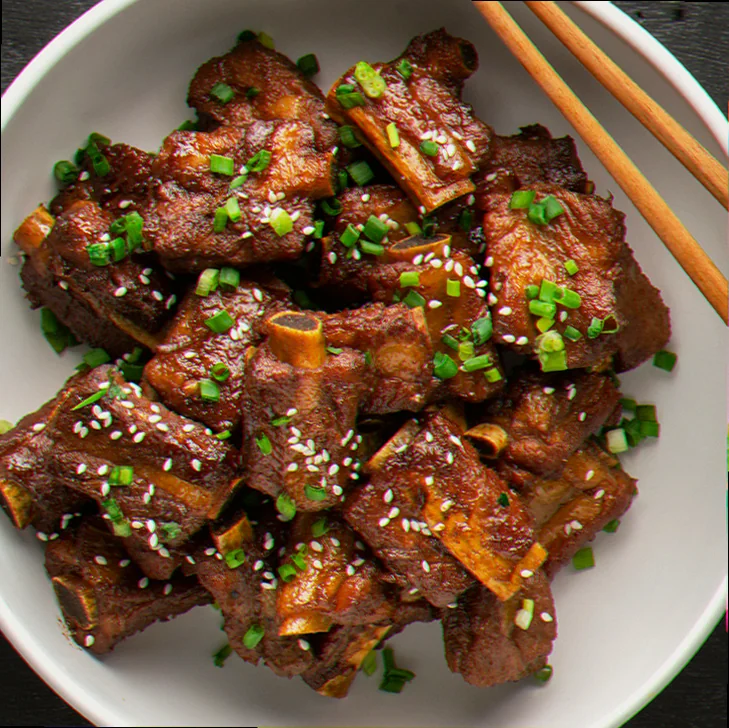
The allure of Chinese spare ribs lies in their irresistible balance of succulent, fall-off-the-bone meat, and a sticky, deeply caramelised glaze. This magic is born from the precise interplay of heat and chemistry: the slow breakdown of collagen in the pork ribs into luscious gelatin, coupled with the Maillard reaction and sugar caramelisation on the surface, creating that signature sweet-savoury crust. Originating from the rich culinary traditions of Chinese cuisine, these ribs are a testament to the power of marinade and patient cooking.
Complete Recipe Overview
| Property | Detail |
|---|---|
| Dish entity | Chinese Spare Ribs (Char Siu Style) |
| Cuisine origin | Cantonese, Southern China |
| Defining technique | Marinating, Slow Roasting/Baking, and Glazing |
| Hero ingredients | Pork Spare Ribs, Honey/Maltose, Shaoxing Wine |
| Critical ratio | Sweet (honey/maltose) to Umami/Savoury (soy/hoisin) - approximately 1:1 by volume for the primary glaze. |
| Prep time | 20 minutes |
| Cook time | 120-150 minutes at 160°C, then 10-15 minutes at 200°C |
| Rest / chill time | 30 minutes (marinade minimum), 10 minutes (after cooking) |
| Yield | 4-6 servings |
| Difficulty | Medium - Requires attention to timing and temperature for optimal tenderness and glaze. |
Ingredients: Quantities, Roles, and Critical Ratios
The structural logic of this ingredient list hinges on balancing the rich, fatty nature of pork spare ribs with a complex marinade that delivers sweetness, saltiness, umami, and aromatic depth. The critical ratio of sweet elements (honey/maltose) to savoury/umami components (soy sauce, hoisin sauce) is crucial for the dish's defining sticky, glossy glaze and balanced flavour. A ratio of roughly 1:1 by volume ensures neither sweetness nor savouriness overwhelms the other, creating the harmonious profile.
- Pork Spare Ribs - 1.5 kg, cut into 5-7 cm pieces - Role: The primary protein, offering a balance of meat, fat, and bone that yields tenderness and deep flavour when slow-cooked.
- Honey or Maltose Syrup - 60 ml - Role: Provides essential sweetness for caramelisation, contributes to the sticky glaze, and balances the savoury elements. Maltose offers a more traditional, chewier glaze.
- Light Soy Sauce - 60 ml - Role: Delivers foundational saltiness and umami, enhancing the overall savouriness of the marinade.
- Shaoxing Wine - 30 ml - Role: Adds aromatic complexity with its distinctive nutty, floral notes; the alcohol also helps carry flavours and slightly tenderise the meat.
- Hoisin Sauce - 30 ml - Role: Contributes a sweet, tangy, and savoury depth, acting as a natural thickener for the glaze and providing a signature flavour.
- Garlic - 4 large cloves, minced - Role: Aromatic base, adding pungent depth.
- Ginger - 2 cm knob, grated - Role: Fresh, zesty aromatic that cuts through the richness of the pork.
- Five-Spice Powder - 5 grams (1 teaspoon) - Role: A blend of star anise, cloves, Chinese cinnamon, Sichuan pepper, and fennel seeds, providing a complex, warm, and earthy flavour profile.
- White Pepper - 2 grams (½ teaspoon) - Role: Adds a subtle, peppery heat that is characteristic of Chinese cuisine.
- Red Fermented Bean Curd (optional) - 1 cube (approx. 15g) - Role: Imparts a distinctive savoury-umami flavour and a vibrant red hue, often used in authentic Char Siu. Mash it before adding.
- Sesame Oil - 10 ml - Role: Adds a fragrant, nutty aroma and slight richness to the marinade.
- Water (for basting) - 100 ml - Role: To thin out the reserve marinade for basting and prevent burning.
- Spring Onions - 2 stalks, chopped - Role: Garnish, adding freshness and mild onion flavour.
- Toasted Sesame Seeds - 5 grams - Role: Garnish, adding nutty flavour and textural contrast.
The Science of Pork Ribs and Caramelisation
The magic of tender, flavourful Chinese spare ribs hinges on two fundamental food science processes: the breakdown of connective tissue and the Maillard reaction, often accompanied by caramelisation. Pork spare ribs, particularly those with bone, contain a significant amount of collagen, a tough structural protein. When subjected to prolonged, moist heat (such as slow roasting or braising), this collagen denatures and then hydrolyses into gelatin. Gelatin is responsible for the incredibly tender, succulent texture that defines well-cooked ribs, allowing the meat to "fall off the bone." The initial lower temperature cooking (160°C) is ideal for this slow, gentle transformation, preventing the muscle fibres from seizing up and drying out while the collagen slowly melts.
Simultaneously, the surface of the ribs develops its iconic sticky, glossy, and deeply flavoured crust through the Maillard reaction and sugar caramelisation. The Maillard reaction is a complex series of chemical reactions between amino acids (from the pork protein) and reducing sugars (from honey, maltose, soy sauce, hoisin). This reaction begins at temperatures above 140°C and is responsible for the hundreds of flavour compounds and the rich brown colour. Honey and maltose, being primarily composed of simple sugars, readily participate in this process. As the temperature is increased to 200°C towards the end of cooking, these sugars on the surface also undergo caramelisation - the thermal decomposition of sugars themselves, leading to additional sweet, nutty, and slightly bitter notes, and an even deeper golden-brown hue. The interaction of these two processes, facilitated by the sugars and proteins in the marinade, creates the ribs' characteristic complex flavour and irresistible sticky exterior.
Method: Marinating and Roasting at Every Critical Stage
This method is optimised for maximum flavour penetration into the pork and the development of a tender interior with a beautifully caramelised, sticky exterior glaze.
- Prepare - Ribs: Pat the pork spare ribs dry thoroughly with paper towels. This promotes better browning and adhesion of the marinade. Cut ribs into individual or two-bone pieces (5-7 cm length).
- Combine - Marinade: In a large bowl, whisk together the honey/maltose, light soy sauce, Shaoxing wine, hoisin sauce, minced garlic, grated ginger, five-spice powder, white pepper, optional mashed red fermented bean curd, and sesame oil until well combined.
- Marinate - Pork: Add the prepared ribs to the marinade, ensuring each piece is thoroughly coated. For best results, cover the bowl and refrigerate for a minimum of 4 hours, or ideally, overnight (12-24 hours). This prolonged marination time is a Critical Control Point 1; insufficient time means the flavours won't fully penetrate the meat. If marinating longer than 24 hours, the acids in some components could begin to break down the meat too much, leading to a slightly mushy texture, so stick within the recommended range.
- Preheat - Oven: Preheat your oven to 160°C. Line a baking tray with foil and place a wire rack on top. This allows air circulation around the ribs, promoting even cooking and caramelisation.
- Arrange - Ribs: Remove the ribs from the marinade, shaking off any excess. Reserve about 60 ml of the marinade for basting later. Arrange the ribs in a single layer on the wire rack, ensuring they are not overcrowded.
- Slow Roast - Initial Cook: Place the baking tray with ribs in the preheated oven. Roast for 90 minutes. This slow, gentle heat is Critical Control Point 2; it's crucial for breaking down the collagen into gelatin without drying out the meat. The ribs should start to look slightly shrunken and have a light golden hue, and the internal temperature should reach 75-80°C.
- Baste - First Glaze: After 90 minutes, remove the