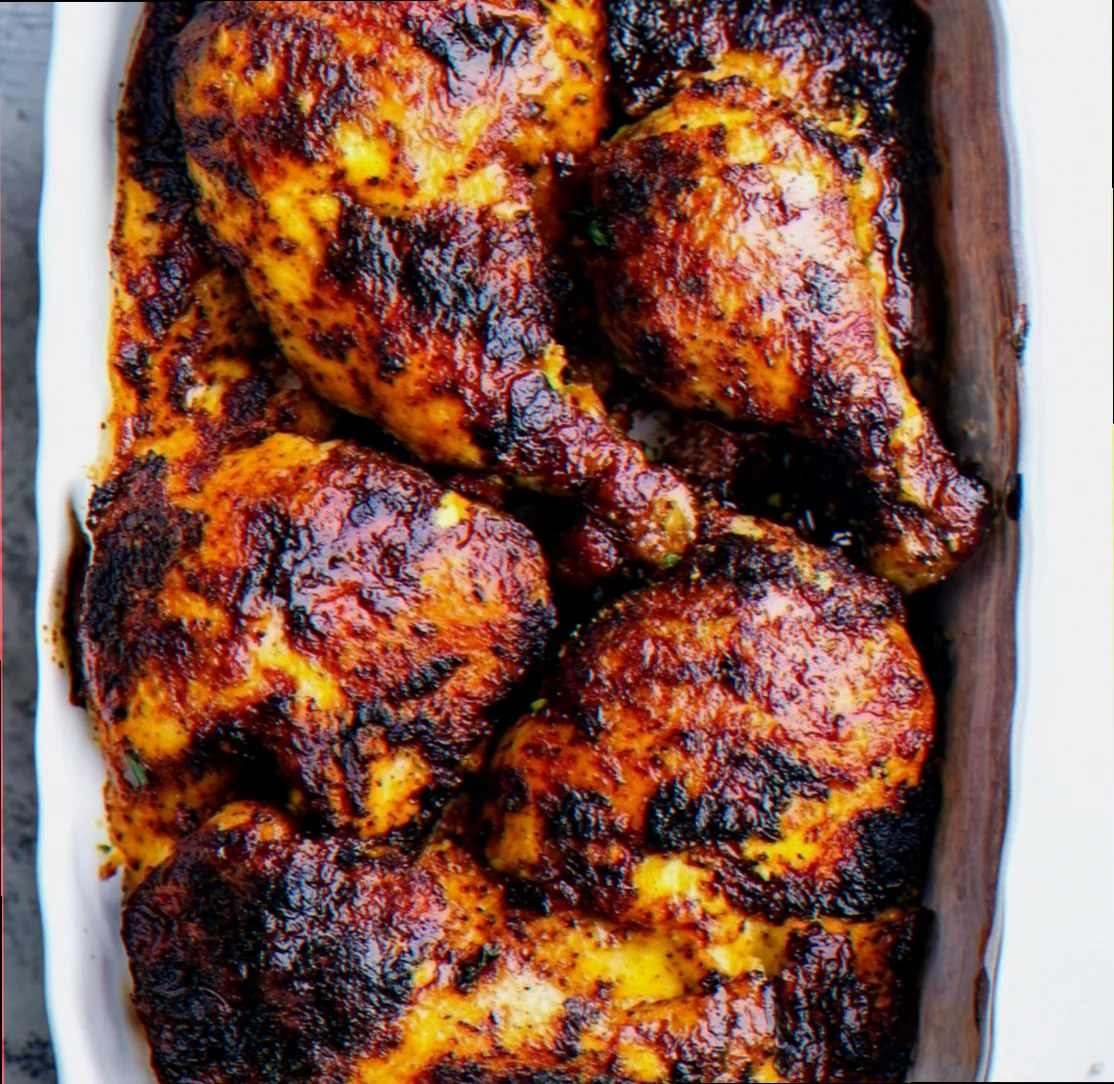
Achieving the signature smoky depth and piquant heat of authentic Jamaican jerk chicken within a standard domestic oven relies on a chemically balanced wet marinade and the strategic use of convection heat to mimic a traditional pimento wood grill. This version works by leveraging high-temperature roasting to trigger the Maillard reaction on the skin while the phosphoric and citric acids in the marinade tenderize the muscle fibers, resulting in a succulent interior and a charred, aromatic exterior.
Recipe Overview
| Detail | Value |
|---|---|
| Dish | Oven-Roasted Jamaican Jerk Chicken |
| Cuisine / category | Caribbean / Poultry Main Course |
| Prep time | 25 minutes (plus marinating) |
| Cook time | 45 minutes |
| Total time | 70 minutes |
| Servings | 4 to 6 people |
| Difficulty | Medium |
| Key technique | Convection Roasting and Wet Marination |
| Flavour profile | Smoky, Umami, Piquant, Herbaceous |
| Best served | Family Sunday Dinner / Weekend Feast |
Ingredients
The following ingredient list is calibrated to create a thick, clingy marinade that provides both a chemical tenderizer and a sugar-protein base for caramelization. The inclusion of whole pimento berries is essential for the authentic woody aroma that defines the jerk profile.
- 1.5kg Chicken Thighs and Drumsticks: Bone-in and skin-on for maximum moisture retention and fat rendering.
- 60g Scallions (Green Onions): Approximately 6-8 stalks, roughly chopped to provide a sharp, sulfurous base.
- 40g Scotch Bonnet Peppers: Approximately 3-4 peppers, deseeded for moderate heat or kept whole for intense capsaicin impact.
- 30g Fresh Ginger: Peeled and sliced against the grain to release essential oils.
- 25g Garlic Cloves: Approximately 6 large cloves, peeled.
- 15g Whole Pimento Berries (Allspice): Freshly toasted and ground for a warm, clove-like aromatic profile.
- 10g Fresh Thyme Leaves: Stripped from the woody stems (approx. 5-6 sprigs).
- 60ml Soy Sauce: Provides the primary salt content and deep umami coloring.
- 30ml Lime Juice: Freshly squeezed to provide the acidity required for protein denaturation.
- 15ml Vegetable Oil: To emulsify the marinade and conduct heat during the initial roasting phase.
- 45g Dark Brown Sugar: High molasses content to facilitate rapid browning and balance the heat of the peppers.
- 5g Ground Cinnamon: Adds a subtle earthy sweetness that complements the pimento.
- 5g Ground Nutmeg: Adds aromatic complexity and warmth.
- 5ml Browning Sauce: (Optional) For a deeper, traditional mahogany aesthetic.
Step-by-Step Method
The logic of this method ensures that the chicken is first chemically altered through marination before being subjected to dry, high-intensity heat to produce a crispy, charred skin without drying out the dark meat.
- Step 1 - Prepare the Jerk Paste: Combine the scallions, Scotch bonnets, ginger, garlic, ground pimento, thyme, soy sauce, lime juice, oil, brown sugar, cinnamon, and nutmeg in a high-speed blender. Pulse until the mixture reaches a thick, slightly textured paste consistency. You should smell a pungent, spicy, and sweet aroma that is characteristic of Caribbean aromatics.
- Step 2 - Marinate the Poultry: Place the 1.5kg of chicken pieces in a large glass bowl or a heavy-duty resealable bag. Pour the marinade over the meat, ensuring every crevice and the area under the skin is coated. Massage the paste into the fibers for 2 minutes. Seal and refrigerate for at least 4 hours, though 12-24 hours is optimal for the salt and acid to penetrate the bone.
- Step 3 - Temper and Preheat: Remove the chicken from the refrigerator 30 minutes before cooking to bring it to room temperature. This ensures even heat distribution. Preheat your oven to 200°C (390°F) or 180°C for fan-assisted ovens. Position the oven rack in the center.
- Step 4 - Set up the Roasting Environment: Line a large baking sheet with aluminum foil for easy cleanup. Place a wire cooling rack on top of the sheet. Arrange the chicken pieces on the rack with at least 2cm of space between each piece. This allows hot air to circulate 360 degrees around the meat, preventing the bottom from becoming soggy.
- Step 5 - Roast and Monitor: Slide the tray into the oven. Roast for 40-45 minutes. Around the 30-minute mark, check for a sensory cue: the skin should be bubbling, and the edges of the marinade should start to turn black (the "jerk char"). The internal temperature at the thickest part of the thigh should reach 74°C (165°F).
- Step 6 - Final Broil: If the skin is not sufficiently charred, turn the oven to the broiler (grill) setting for the final 3 minutes. Watch closely to prevent the sugar in the marinade from burning excessively; you are looking for a deep, mottled mahogany color.
- Step 7 - Rest and Serve: Remove the chicken from the oven and transfer it to a warm platter. Tent loosely with foil and allow the meat to rest for 10 minutes. This allows the internal juices to redistribute, ensuring the succulent texture is maintained when bitten.
The Science Behind Oven-Roasted Jerk Chicken
The transformation of raw poultry into jerk chicken is a masterclass in organic chemistry. The primary mechanism at play is the Maillard reaction, a chemical reaction between amino acids and reducing sugars that gives browned food its distinctive flavor. Because the marinade contains 45g of dark brown sugar and soy sauce (rich in amino acids), this reaction occurs more vigorously at the 200°C oven temperature. Furthermore, the capsaicin in the Scotch bonnet peppers is oil-soluble; by including vegetable oil in the marinade, we ensure the heat is evenly distributed across the palate rather than hitting in isolated bursts. The use of a wire rack is a critical equipment entity choice; it facilitates convection, allowing the moisture evaporating from the chicken to be swept away, which is the only way to achieve "crispy" skin in a non-grill environment. Without the rack, the chicken would sit in its own juices and essentially braise, losing the signature jerk texture.
Ingredient Substitutions and Variations
While the traditional recipe is steeped in specific Caribbean ingredients, modifications can be made to accommodate local availability or dietary preferences while maintaining the dish's core identity.
- Scotch Bonnet Peppers → Habanero Peppers: Both peppers share a similar Scoville heat rating (100,000-350,000 SHU). The Habanero provides the necessary heat and floral notes, though it lacks the slightly fruitier undertone of the Scotch bonnet. Verdict: Works exceptionally well.
- Whole Pimento Berries → Ground Allspice: If whole berries are unavailable, use 1.5 teaspoons of pre-ground allspice. However, the flavor will be less vibrant as essential oils dissipate quickly after grinding. Verdict: Use only if necessary.
- Soy Sauce → Liquid Aminos or Tamari: For those seeking a gluten-free variation, tamari offers the same salty, umami profile without the wheat content. Verdict: Works perfectly.
- Vegetarian Variation - Cauliflower or Firm Tofu: Replace the chicken with large cauliflower florets or pressed extra-firm tofu. Reduce roasting time to 25 minutes. Note that the lack of animal fat will result in a less "sticky" char.
- Honey Jerk Variation: Replace half of the brown sugar with 30ml of wildflower honey for a glossier, stickier finish that adheres better to the skin.
Make-Ahead, Storage, and Reheating
Jerk chicken is a robust dish that benefits from "aging" as the spices continue to meld. You can prepare the jerk paste up to 7 days in advance if stored in an airtight glass jar in the refrigerator. Once cooked, the chicken can be stored in a sealed container for up to 4 days.
Reheating: To maintain the crispy skin texture, avoid the microwave. Instead, place the chicken on a baking sheet and heat in a 175°C (350°F) oven for 12-15 minutes until the internal temperature reaches 65°C. For long-term storage, the marinated (but uncooked) chicken can be frozen for up to 3 months. Thaw completely in the refrigerator before roasting as per the standard method.
What to Serve With Oven-Roasted Jerk Chicken
To balance the intense heat and aromatic profile of the jerk seasoning, pair this dish with sides that offer creamy, cooling, or neutral attributes.
- Rice and Peas: The quintessential pairing. The coconut milk in the rice provides a fatty barrier that coats the tongue, mitigating the capsaicin burn from the Scotch bonnets.
- Fried Sweet Plantains (Maduros): The high sugar content and soft texture of caramelized plantains offer a textural contrast to the charred chicken skin and a sweet counterpoint to the salt.
- Caribbean Coleslaw: A vinegar-based slaw with shredded cabbage and carrots provides a crisp, acidic crunch that cuts through the richness of the chicken thighs.
Common Mistakes and How to Avoid Them
- Mistake 1: Overcrowding the pan. If the chicken pieces are touching, they will steam instead of roast, leading to rubbery skin. Fix: Use two baking sheets if necessary to ensure at least 2cm of air space around each piece.
- Mistake 2: Using chicken breast. The lean protein of the breast dries out long before the marinade has a chance to caramelize. Fix: Stick to bone-in, skin-on dark meat (thighs and legs) which contains enough connective tissue and fat to withstand high oven temperatures.
- Mistake 3: Skipping the resting period. Cutting into the chicken immediately after it leaves the oven causes the internal steam to escape, leaving the meat dry. Fix: Wait the full 10 minutes; the carry-over cooking will finish the dish perfectly.