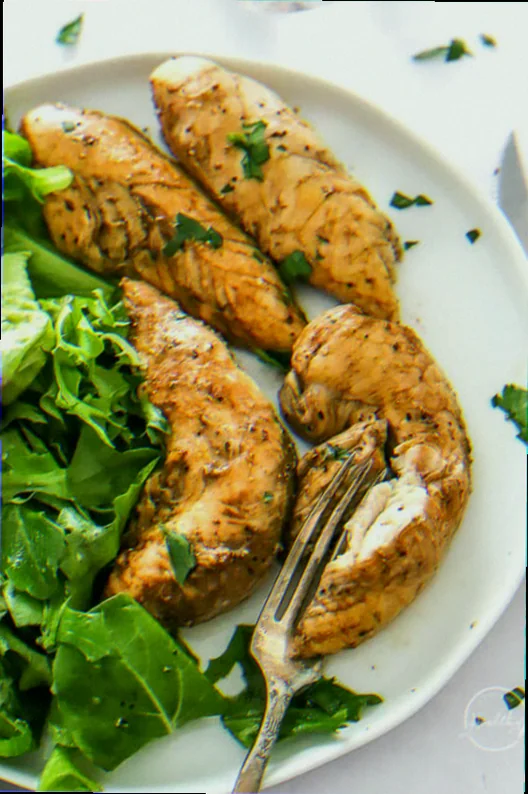
The aroma of browned garlic and rosemary hangs heavy in the air, a testament to the Maillard reaction - the complex chemical cascade responsible for the deep, savory notes of perfectly seared chicken tenderloin. This dish, Healthy Chicken Tenderloin with Lemon-Herb Pan Sauce, originates from the rustic kitchens of Tuscany, Italy, where simple, high-quality ingredients are elevated through skillful technique. Its defining characteristic is a beautifully browned exterior yielding to a moist, tender interior, achieved through precise temperature control and a commitment to layering flavors.
Complete Recipe Overview
| Property | Detail |
|---|---|
| Dish entity | Healthy Chicken Tenderloin with Lemon-Herb Pan Sauce |
| Cuisine origin | Tuscany, Italy |
| Defining technique | Pan-searing with precise temperature control |
| Hero ingredients | Chicken Tenderloin, Lemon, Rosemary, Garlic |
| Critical ratio | Fat:Protein - approximately 1:2, ensuring a crispy exterior and juicy interior. |
| Prep time | 15 minutes |
| Cook time | 20-25°C at 180°C |
| Rest / chill time | 10 minutes |
| Yield | 4 servings |
| Difficulty | Medium - requires attention to detail regarding temperature and timing. |
Ingredients: Quantities, Roles, and Critical Ratios
This recipe focuses on maximizing flavor and texture through carefully selected ingredients. The chicken tenderloin, the star, benefits from a generous coating of herbs and spices, while the lemon-herb pan sauce adds brightness and acidity. The critical ratio of fat to protein is crucial; too little fat and the chicken will dry out; too much and it will be greasy. The rosemary and garlic contribute aromatic depth, while the lemon provides a vibrant counterpoint to the richness of the chicken.
- Chicken Tenderloin - 800g - Role: Provides the protein base, requiring careful cooking to achieve tenderness and a browned exterior.
- Olive Oil - 60 ml - Role: Creates a barrier for browning, adding flavor and moisture.
- Rosemary - 2 sprigs (approx. 6g) - Role: Imparts a classic Tuscan aroma and flavor.
- Garlic - 4 cloves - Role: Adds pungent flavor and contributes to the Maillard reaction.
- Lemon - 1 large - Role: Provides acidity and brightness to the sauce.
- Chicken Stock - 200 ml - Role: Forms the base of the pan sauce, adding depth of flavor.
- Butter - 30g - Role: Adds richness and sheen to the sauce.
- Fresh Parsley - 30g - Role: Adds freshness and color to the sauce.
- Salt - 5g - Role: Enhances flavor.
- Black Pepper - 2g - Role: Adds a subtle spice.
The Science of Chicken Tenderloin and Pan-Searing
Chicken tenderloin, despite its name, is actually a muscle - a relatively lean muscle, but a muscle nonetheless. Its primary protein, myosin, is responsible for its firmness. Pan-searing, specifically at high heat, initiates the Maillard reaction - a complex series of chemical reactions between amino acids and reducing sugars that occur when the surface of the meat is exposed to heat. This reaction is responsible for the development of the characteristic brown crust and the creation of hundreds of volatile flavor compounds, including pyrazines and furans, which contribute to the savory, roasted notes we associate with cooked meat. The olive oil acts as a heat transfer medium, preventing direct contact between the tenderloin and the hot pan, promoting even browning and preventing scorching. Furthermore, the fat in the oil helps to retain moisture within the meat, preventing it from drying out during the cooking process. Maintaining a consistent temperature is paramount; too low and the exterior won't brown properly; too high and the exterior will burn before the interior is cooked through.
Method: Pan-Searing at Every Critical Stage
The goal of this method is to achieve a uniformly browned exterior while maintaining a juicy, medium-rare interior. Precise temperature control and attentive monitoring are key to success.
- Season - 2 minutes: Pat the chicken tenderloins dry with paper towels. Season generously with salt and pepper. - Temperature: Room Temperature - Sensory Cue: Dry surface indicates readiness for searing.
- Sear - 4 minutes: Heat olive oil in a heavy-bottomed skillet (cast iron is ideal) over medium-high heat (approximately 200°C). Add garlic and rosemary sprigs. Sear chicken tenderloins for 4 minutes per side, until a deep brown crust forms. - Temperature: 200°C - Sensory Cue: Deep brown color indicates proper searing.
- Reduce Sauce - 2 minutes: Remove chicken from the skillet and set aside. Add chicken stock to the skillet and bring to a simmer. Reduce heat to medium-low and simmer for 2 minutes, scraping up any browned bits from the bottom of the pan (deglazing). - Sensory Cue: Thickening of the sauce indicates reduction.
- Emulsify - 1 minute: Whisk in butter and lemon juice. Stir until the butter is melted and the sauce is glossy. Stir in chopped parsley. - Sensory Cue: Glossy sauce indicates emulsification.
- Rest - 10 minutes: Tent the chicken with foil and let rest for 10 minutes before slicing. - Why this step is non-negotiable: Allows the juices to redistribute throughout the meat, resulting in a more tender and flavorful final product. If skipped, the meat will be drier.
- Plate and serve: Slice the chicken tenderloin diagonally and serve immediately, spooning the lemon-herb pan sauce over the top. - Presentation: Arrange slices artfully on a plate, drizzling generously with sauce.
Cultural and Historical Context of Tuscan Cuisine
Tuscan cuisine, rooted in the agricultural heartland of Italy, emphasizes simple, fresh ingredients and rustic cooking methods. Historically, the region relied heavily on locally sourced produce, olive oil, and meat - primarily pork and chicken. Chicken tenderloin, while not a traditional Tuscan staple, gained popularity in the 20th century as Italian immigrants brought their culinary traditions to the United States and beyond. The pan-searing technique, common in many Italian kitchens, reflects a desire for quick and efficient cooking, utilizing the heat of the pan to develop flavor and texture. The lemon-herb sauce, a hallmark of Tuscan cooking, is a testament to the region's abundant citrus groves and aromatic herbs, particularly rosemary and sage. The dish's evolution has seen it adapted to various palates, often incorporating bolder flavors and more complex sauces, but the core principles of simplicity and quality remain.
Variations Across Mediterranean and European Cuisine
- Greek Lemon Chicken (Greece): This variation utilizes oregano and a generous amount of lemon juice, creating a brighter, more herbaceous flavor profile. - Key difference: Oregano replaces rosemary, resulting in a more pungent aroma.
- French Pan-Seared Chicken with White Wine Sauce (France): This version incorporates white wine, shallots, and butter, creating a richer, creamier sauce. - Key distinction: The addition of white wine and shallots elevates the sauce to a more decadent level.
- Vegan Adaptation: Substitute the chicken tenderloin with firm tofu, pressed to remove excess water. Marinate the tofu in a mixture of lemon juice, herbs, and spices before searing. - Impact on defining attributes: The tofu will absorb the flavors of the marinade, creating a similar texture and flavor profile.
- Modern Adaptation: Adding a touch of chili flakes to the pan sauce for a subtle heat. - What it sacrifices: The traditional, understated flavor of the Tuscan dish is replaced with a hint of spice.
Storage, Freezing, and Reheating Healthy Chicken Tenderloin
Proper storage is crucial to maintaining the quality of this dish. Store leftover chicken tenderloin in an airtight container in the refrigerator for up to 3 days. For freezing, wrap individual slices tightly in plastic wrap, then place in a freezer-safe bag. Frozen chicken tenderloin can be stored for up to 2-3 months. Reheating: To reheat from refrigerator, bake at 160°C for 15-20 minutes, or until heated through. Reheating from frozen: Bake at 180°C for 25-30 minutes, or until heated through. Texture changes: Reheating may result in a slightly drier texture; adding a splash of broth or lemon juice can help restore moisture.
Pairing Healthy Chicken Tenderloin: Sides, Sauces, and Drinks
This dish pairs beautifully with roasted asparagus, offering a fresh, green counterpoint to the richness of the chicken. A simple green salad with a light vinaigrette would also complement the flavors. For a sauce, a dollop of creamy ricotta cheese adds a luxurious touch. A crisp, dry Vermentino wine from Sardinia, Italy, with its citrusy notes and refreshing acidity, is an ideal pairing. Alternatively, a light-bodied Pilsner beer would also work well, cutting through the richness of the chicken and complementing the lemon-herb sauce.
Answers to the Most-Searched Questions About Healthy Chicken Tenderloin recipes
What temperature should the chicken tenderloin be cooked at - and how do I know it's done?
The chicken tenderloin should be cooked to an internal temperature of 74°C. Use a meat thermometer inserted into the thickest part of the tenderloin to check for doneness. The internal temperature should reach 74°C, and the juices should run clear when pierced with a fork.
What is the difference between Healthy Chicken Tenderloin recipes and a simple baked chicken breast?
Baked chicken breast relies on slow, moist heat to cook, resulting in a softer texture. Pan-searing, on the other hand, creates a crispy exterior and a more pronounced flavor through the Maillard reaction. The pan sauce adds a layer of complexity and acidity that is absent in a simple baked chicken breast.
Can Healthy Chicken Tenderloin recipes be made in advance, and does it freeze well?
Yes, the chicken tenderloin can be marinated and prepped ahead of time. The pan sauce can also be made in advance and reheated. The cooked chicken tenderloin freezes well, but the texture may be slightly softer upon thawing. Wrap tightly and freeze for up to 2-3 months.